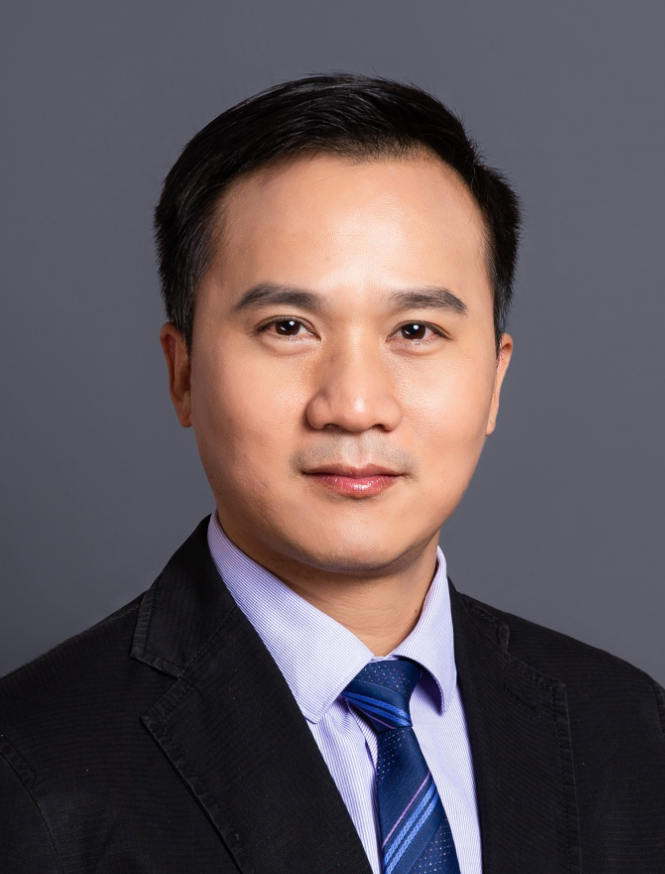
Daoxin Dai
Executive President of China Jiliang University, Qiushi Distinguished Professor at Zhejiang University, and Chair of the Optical Society of Zhejiang Province.
Speech Topic:
Silicon Photonic Chips for Artificial Intelligence
Speech Summary:
The exponential growth of Artificial Intelligence (AI) is pushing the limits of conventional electronic computing, creating a critical need for more efficient hardware solutions. In this plenary talk, we discuss the potential of Silicon Photonic Chips as a promising platform for accelerating AI workloads. In particular, this talk includes three parts. The first part is related with silicon photonic transceivers with unprecedented data bandwidth and reduced energy consumption to effectively address the interconnect bottlenecks. The second part is focused on silicon photonic switches for reconfigurable data routing in optical interconnects. The third one is about silicon photonic computing and processing, such as matrix multiplications. Finally, we will further talk about the challenges and prospective of silicon photonics for AI.
Short Bio:
Daoxin Dai received the B.Eng. degree from Zhejiang University (ZJU), China, and the Ph.D. degree from the Royal Institute of Technology, Stockholm, Sweden, in 2000 and 2005, respectively. He joined Zhejiang University as an assistant professor in 2005, and became an associate professor in 2007 and a full professor in 2011. He worked at the University of California at Santa Barbara (UCSB) as a visiting scholar during the years of 2008-2011. Currently Prof. Daoxin Dai is the executive president of China Jiliang University and the Chair of Optical Society of Zhejiang Province. He is the Qiushi Distinguished Professor of ZJU and is leading the silicon integrated nanophotonics group at ZJU. He is the pioneer in the fields of asymmetric silicon photonics, multimode silicon photonics, and silicon-plus photonics. He is the Winner of National Science Fund for Distinguished Young Scholars (2017), Wang-Daheng Award of Optics (2020), the first-class Zhejiang Provincial Award for Natural Science (2020), the first-class Award of Chinese Optical Society (2020), the first-class Award of Chinese Society of Optical Engineering (2025). Prof. Daoxin Dai has published more than 400 refereed international journals papers in Science, Nature, Nature Photonics, etc., and has been invited to give >100 plenary/tutorial/keynote/invited talks on silicon photonics at prestigious national/international conferences including OFC, ECOC and CLEO. Prof. Daoxin Dai is one of Most Cited Chinese Researchers in 2014-2025 (from Elsevier’s report). He is a Fellow of Optica (formerly OSA).
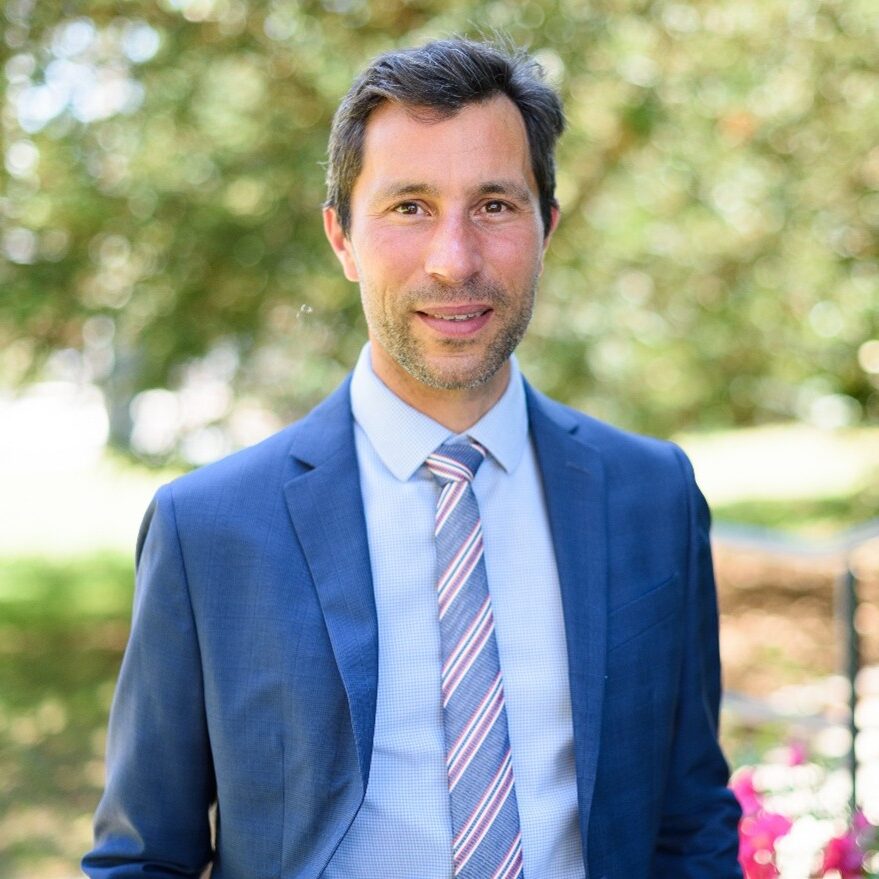
Guillaume Roels
Timken Chaired Professor of Global Technology and Innovation, INSEAD
Speech Topic:
Optimizing Service Encounters: A Co-Productive, Experiential, and People-Centric Approach
Speech Summary:
Most value creation in services takes place in service encounters — at the interfaces between customers, employees, and service organizations. However, managers are often unable to effectively optimize them, because their tools either fail to fully comprehend these interfaces, lying therefore on the fringes of the value creation process, or predate digital technologies. This monograph reviews the recent development of three levers for optimizing service encounters, which lie at the core of the service value creation process and are relevant in a digital world. These levers are: leveraging co-production to innovate in service design; delighting customers through experience design; and fostering employee engagement by putting people first. Given today’s abundant datasets and short feedback loops enabling scientific experimentation, we argue that the time is ripe for effectively optimizing service encounters.
Short Bio:
Guillaume Roels is the Timken Chaired Professor of Global Technology and Innovation at INSEAD. His research lies on the interface of operational excellence, people-centric operations, and the management of services. Some of his recent work has focused on collaborative dynamics in organizations, design of service experiences, and customer ownership in queuing systems. He is currently serving as the Editor-in-Chief of Service Science and was previously a Department Editor at M&SOM and an Associate Editor at Management Science. He has received numerous research awards, including Finalist in the 2024 International Service Science Best Student Paper Competition, Second Place in the 2023 International Service Science Cluster Best Paper Competition, an Honorable mention in the 2016 International Service Science Best Published Paper Competition, and the First prize in the 2013 International Service Science Cluster Best Paper Award Competition.
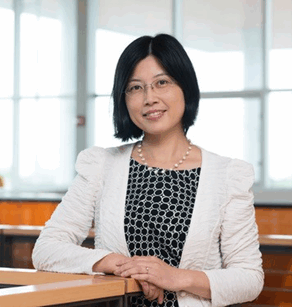
Dr . Guiping Hu
Professor and Department Chair of Systems Engineering and Operations Research at George Mason University
Speech Topic:
System thinking to address trans-disciplinary service challenges
Speech Summary:
The landscape in research for service sectors continues to evolve rapidly, driven by emerging opportunities and challenges with significant societal implications. As a pivotal approach to embracing these challenges and opportunities, trans-disciplinary research plays an increasingly important role, especially as systems become borderless and dynamic. During this process, it is critical to embrace and adopt system thinking to address trans-disciplinary service challenges. Dr. Hu will share an overview of service systems and digitalization in the era of artificial intelligence and digital twin adoption. Application domains will include supply chain design, manufacturing production, renewable energy production, sustainable agriculture, and healthcare.
Short Bio:
Dr . Guiping Hu is a Professor and Department Chair of Systems Engineering and Operations Research at George Mason University. During 2023 – 2025, she served as the School Head of Industrial Engineering and Management at Oklahoma State University. During 2022-2023, she served as the Associate Chair of the Department of Industrial and Manufacturing Systems Engineering at Iowa State University where she was a faculty from 2009-2023. Dr. Hu’s research has been supported by NSF, USDA, DOE, and DOD with over $12M funding. She has published over 100 journal articles and 50 conference proceedings. She is an Institute of Industrial and Systems Engineers (IISE) Fellow, ELATES fellow, and an NSF IAspire Leadership Academy Fellow.
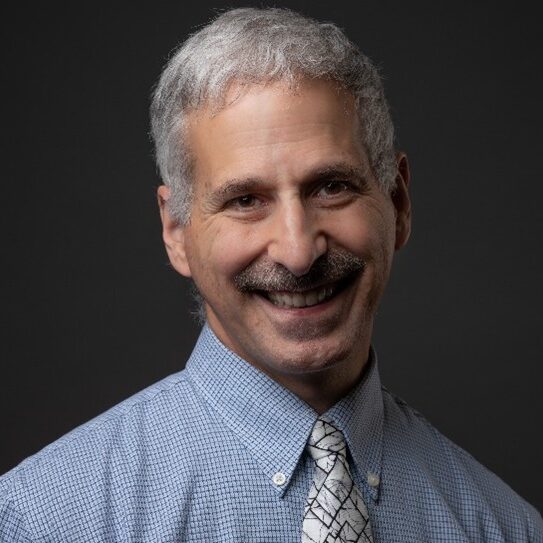
Paul R. Messinger
Professor of Marketing and Chair of the Department of Marketing, Business Economics, and Law at the University of Alberta School of Business
Speech Topic:
How to BRIDGE the Digital Divide: A Framework and Research Agenda
Speech Summary:
This presentation explores communication gaps between different generations, specifically between digital natives (people raised with full access to digital technologies) and digital laggards (people raised earlier who retain earlier practices). The speaker introduces the BRIDGE framework, which identifies five key dimensions of differences: (1) Boundaries Perceptions, (2) Relationship Focus, (3) Information Processing Style, (4) Digital Literacy, and (5) Generational Language. The talk also examines the emergent consequences of these gaps, including over-communication and perceived irrelevance. The presentation summarizes past literature and suggests future research avenues to better understand miscommunication between digital natives and digital laggards.
Short Bio:
Paul R. Messinger is Professor of Marketing and Chair of the Department of Marketing, Business Economics, and Law at the University of Alberta School of Business and Past-Chair of the International Service Science Section. He has served on the Boards of International and the International Marketing Science Society, and on Editorial Boards of Marketing Science, Service Science, and as Guest Area Editor of Information Technology and Management. He has numerous peer-reviewed articles, book chapters, and five books about service science, emerging retail formats, the Metaverse, cities of the future, consumer behavior, e-commerce, and recommendation systems. Ten of his papers have more than 100 Google citations, including four with more than 300 citations. He holds a PhD (Economics) and MA (Statistics) from UC Berkeley, an MBA from Harvard Business School, and a BA from Carleton College.